Monday, July 11, 2016

MONDI MALICK HOMESTAY


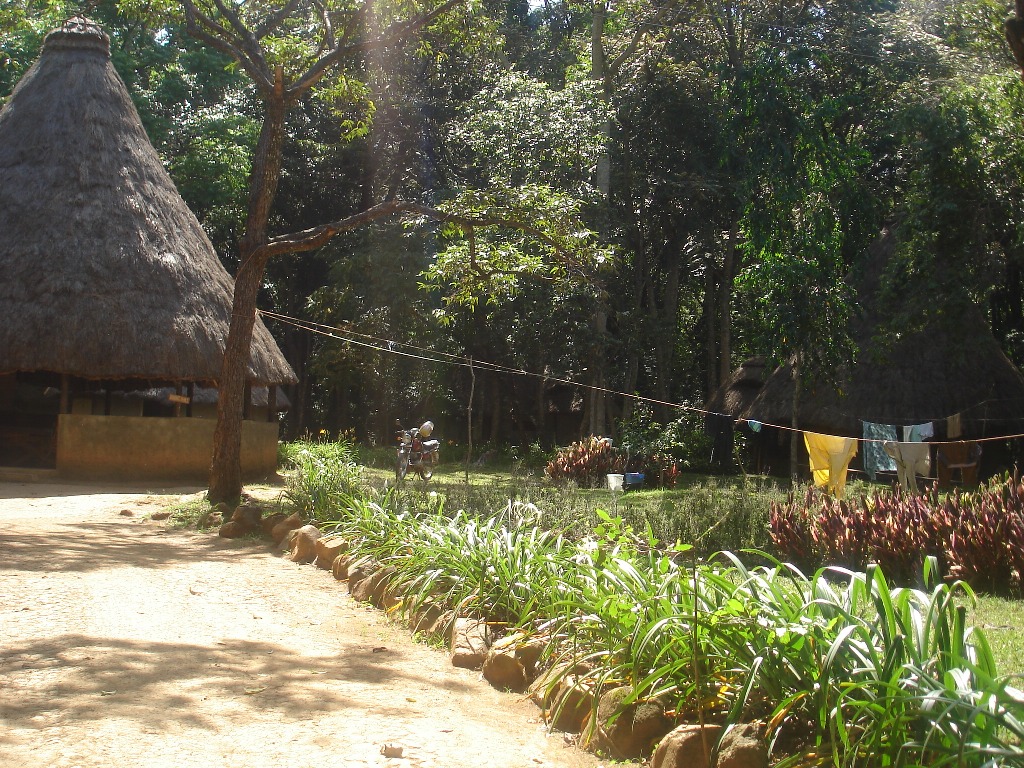
The homestay is run by Mr. Malick Mondi, a member of Farmers Dialogue Africa, a worldwide organization. The house set a side for guests was initially the parent’s house now converted for guest’s accommodation. The house has spacious separate four bedrooms. Besides, the family also practices agro business where Malbary plants are grown for processing silk material.

For more information:
Tel: 020 2319458
Mobile: +254 726 489 446 / +254 720 546 457
Email : info@kecobat.org
Follow us on Twitter: @KECOBAT 
Like us on Facebook: Kenya Community Based Tourism Network  

More pictures


KEEP BANDAS AND COTTAGES


Kakamega Environmental Education Programme (KEEP) is Community Based Tourism Organization situated within Kakamega Wildlife Conservancy. The Organization is currently having 12 affiliate host families providing homestays accommodation services to visitors. The group operates on a leased land contributing 5% of their income to Kenya Forest Service (KFS). 

Visitors can stay in the group’s ‘bandas’ (cottages) and have a pleasant experience of the exciting Forest's rich biodiversity Park and have the option to interact with locals and involve in the myriad community conservation activities including environmental conservation education, Energy conservation techniques, Butterfly farm project of over 400 species, Nature walks, Sunrise/sunset on Lirhanda hill, Bird watching of over 300 birds species, Hiking and Cultural entertainment such as bullfights and story telling. 

The Organization also runs Conference facilities, Tree nursery for commercial and medical plants for processing Mondia Tonic at their own community owned village based processing plant based in Kakamega town and information centre and Canopy Watch Tower allowing people to accesses and view the beautiful landscape as well as health programmes focusing on reproductive sexual health and HIV/AIDS awareness services.


For more information:
Tel: 020 2319458
Mobile: +254 726 489 446 / +254 720 546 457
Email : info@kecobat.org
Follow us on Twitter: @KECOBAT 
Like us on Facebook: Kenya Community Based Tourism Network  

More Pictures


Monday, June 27, 2016

STONEYHILL VIEW HOMESTAY


Stoneyhill view is situated in Kisumu Town, on the prime Kajulu Hills of Mamboleo area. Accommodation services comprises of 8 en-suite rooms and unique restaurant area overlooking the beautiful view of Lake Victoria. In addition the house an executive meeting hall suited for special breakaway corporate stayover.

For more information:
Tel: 020 2319458
Mobile: +254 726 489 446 / +254 720 546 457
Email : info@kecobat.org
Follow us on Twitter: @KECOBAT 
Like us on Facebook: Kenya Community Based Tourism Network  

More Pictures


Thursday, June 9, 2016

KAPTAGAT FARM RESORT


Kaptagat Farm resort is situated about 20km from Eldoret town, in Keiyo South, Kaptagat. Kaptagat Farm resort is owned by Ms. Selly Chelimo a very pleasant host. The home is well known for its beautiful surrounding environment offering homestay accommodation facility, family services, self catering and Nyama Choma within home ground ranch under nature oven. The house is located in prime spot, nature flavour and water based area. 

The host family provides a number of activities to keep guest active and learn the cultural lifestyle within the home including; Agro business, aquaculture, poultry and greenhouse farm activities. The family employs local community members to work in the green houses and also provides training opportunities for them. A training camp has also been initiated for local athletes. 

The home has a great advantage of having a natural source of clean river freshwater for domestic and farming activities and therefore an ideal homestays, well maintained in hygienic and safe environment. The home surrounding enhances opportunities for adventurous water activities, nature walks and forest bird watching.

For more information:
Tel: 020 2319458
Mobile: +254 726 489 446 / +254 720 546 457
Email : info@kecobat.org
Follow us on Twitter: @KECOBAT 
Like us on Facebook: Kenya Community Based Tourism Network  


More Pictures
View  from the back of the house

One of the rooms


One of the Greenhouses at the farm

Tomatoes inside one of the greenhouses 


Friday, May 27, 2016

KODOTE ECO-VILLAGE RESORT

The eco-village was founded in 2007 by the host family of Odote, coordinated by Mr. Dickens Ochieng Odote. The village has several house units and 4 bedroomed self-catering guesthouse unit with bed capacity of 6 adult persons. The home has additional suitable camping ground for extra guest interested in enjoying the peaceful warm star light skies of the dark rural nights. The home is situated in Homabay, Rangwe Division, Central Kochia.

Pictures

View of the house from the Main gate


Visitors at the Homestay


Pineapple Farming

For more information:
Tel: 020 2319458
Mobile: +254 726 489 446 / +254 720 546 457
Email : info@kecobat.org
Follow us on Twitter: @KECOBAT 
Like us on Facebook: Kenya Community Based Tourism Network  

Wednesday, November 18, 2015

KECOBAT VISITS UGANDA FOR A BENCHMARKING MISSION AND WIDENING PARTNERSHIP

By Taiko Lemayian 

KECOBAT Director Mr. Taiko Lemayian visited Uganda from the 18th – 26th October 2015 for a meeting with the Uganda Community Tourism Association (UCOTA) in Kampala, Uganda. The main objective of the visit was to participate in a four day training facilitated by Fredskorpset (FK) to orientate Tanzania Association for Cultural Tourism Organizers team to FK and to draw modalities for renewal of an expanded tripartite partnership between community tourism practitioners in Kenya, Uganda and Tanzania. The secondary objective for the Uganda visit was to benchmark Kenya’s Community Based Tourism Businesses/Enterprises with those of Uganda.

UCOTA were represented by Madam Helen Lubowa UCOTA’s Executive Director and Jennifer Magala UCOTA’s Administrator while TACTO was represented by Freddy Masawe (Executive Director) and Edith Shoo (Treasurer). TACTO (http://www.tactotanzania.org) is non-government organization in Tanzania which works to foster good working relationships of cultural groups dealing in cultural tourism or similar activities in Tanzania in order to empower them to transform the lives of their families through the development of sustainable micro-enterprises in the way of cultural tourism products for sale to tourist.

After the FK Training, Taiko had a opportunity of visiting a number of community based tourism initiatives in the western part of Uganda in order to bench mark them with the Kenya’s Community Based Tourism businesses and draw opportunities for sharing skills and experiences. Some of the projects visited were:

Tinka’s Homestay
We set-off from Kampala on 24th October 2015 in a rather wet morning; we headed to Entebbe to pick Mr. Thore Anton Bredeveien of FK who was joining us for the excursion. Our driver was Isa and Lubega Paul Muwonge of UCOTA was to chaperon us around. We had a long but pleasant ride and had to stop at Mubende Town in Central Region for a breather after having driven roughly for 230KM. Our next stop was Fort Portal town in the Torro Kingdom where we had our late afternoon lunch in a cosy restaurant called Garden Restaurant.

We set off again for Bigodi village that is situated 40 Km away in the highlands of western Uganda. The comfort of tarmac road ended a after a Kilometre from Fort Portal when we branched off to take Kamwenge road. This road was fairly smooth and it took us through lushly green undulating hills and valleys that were covered with tea plantations. Halfway through our ride, we encountered lots of earth works in preparation for the tarmacking of the road. The road become extremely wet and muddy because of the evening showers. Vehicles we sliding and swinging while others were pushes. Young men from the villages around were making briskly business pushing vehicles for a fee. We were lucky to have made it through the bad stretch of the road without many hitches. After doing close to 30 Km, we entered Kibale National Park. There were no gates and we made through the parks smooth road after the sun had set. We encountered a new tarmac a few km before reaching Bigodi village. We were taken straight to Tinka’s homestay where we spend a memorable evening.

Tinka's house is newly built and should be considered comfortable even by western standards. Our rooms were self contained and the beds were comfortable and had mosquito nets. There weren't any running water in the room at that time but that wasn't really a problem. All the traditional delicious food was prepared by Tinka's daughter and well presented besides a traditional kitchen besides the main one story house.

A variety of traditional foodstuffs ware served and we had to sit on traditional schools. The layout of the tables and presentation of the meals under the stars amid African night melodies from the wild crickets and distance frogs was excellent

We had a very interesting story telling and folk dances from the family. Tinka our host unfortunately did not arrive till much later after we had retired to sleep. We has not as fortunate as we were. He way delayed by trucks were stuck in mad that had blocked the way. Tinka was there in the morning though to join us for breakfast.

The Bigodi Wetlands Sanctuary
The Bigodi Wetlands Sanctuary, located in the Magombe wetland and is operated by the Kibale Association for Rural and Environmental Development (KAFRED), a registered community based organization (CBO) with over 80 fee-paying members. The Sanctuary office is located at the edge of Bigodi trading center. Most of the proceeds accrued from the wetland is used to support Bigodi Secondary School and numerous related community projects.

The Bigodi Wetlands Sanctuary features 8 primate species, including black and white colobus, red colobus, mangabey, red tail, vervet, and L’Hoest. Other wetlands mammals include baboons, sitatunga (an increasingly endangered swamp antelope), bush pigs, civet cats, mongooses, bush bucks and an occasional chimpanzee. The swamp has over 200 species of birds with the great blue turaco, being the favourite bird for visitors. Also frequently seen are varieties of papyrus gonoleks, hornbills, waxbills, weavers, cuckoos, kingfishers, flycatchers, and a host of many, many more. There are plenty of trees, shrubs, ferns etc in the forest to be encountered in the walk. Visitors have to be accompanied by a trained Sanctuary guide to visit the wetland.
After visiting Bigodi Wetland Sanctuaries office and paying the sanctuary fees, we were introduced to our guide who gave us a brief to prepare us on what lays ahead of us. We were provided with gum boots because we were venturing into a swamp.
The walk took close to four hours of an exciting walk. The wetland has a raised board walk in soggy and watery sports with a raised observatory midway that gives you a canopy view of the swamp. We also ventured on the open areas outside the sanctuary boundary in order to sport birds that love the open areas.

We sported over 50 species in the walk and our guide was spot on. He was knew all the birds by their calling and appearance. He educated us on behaviour, character and local tales associated to different species of birds. We were not so lucky with primates. We only saw plenty of red Columbus monkeys that were highly habituated. We also spotted a red tail that was deep in the dense swampy vegetation. I was anxious to spot the blue toraco and was about to lose hope before the graceful birds appeared just before returning to the Bigodi office; call it saving the best for last.
After having had our lunch in Fort Portal, we set off towards Kasese and stopped over in Rubona to visit Rubona Basket Weavers Association (RUBAWA) and Bunyangabu Beekeepers Cooperative. Below is a small profile of these institutions;

Rubona Basket Weavers Association (RUBAWA)
Rubona Basket Weavers Association (RUBAWA) are located 20 km south of Fort Portal along Kasese on the Fort Portal-Kasese road. RUBAWA is made up of a group of 200 women trained and dedicated to weaving basket using naturally dyed raffia to make baskets of all sizes, which are then sold to international markets. The project is wholly owned and run by the local women and the income accrued directly goes to the local household women o meet their basic needs
Being on a tourist route, the group offers training lessons to tourist on basket making and they have a shop that acts as an outlet for their beautiful wares. We had an opportunity to visit the shop and talk to one of the members of the group. Our group were shown the raw raffia and different plants in the shops backyard that were are used to make natural dyes. We purchased a number of beautiful, mats and baskets before crossing over to visit Bunyangabu Beekeepers Cooperative 50 meters away.

Bunyangabu Beekeepers Cooperative
Bunyangabu Beekeepers Cooperative (BBC) is a very successful community organization involved in bee keeping and honey processing. BBC has an apiary that is located about 300 meters from the honey outlet shop which also doubles as a honey processing factory, store and training and demonstration centre. The apiary is well stocked with all types of bee-hives ranging from traditional to modern ones.

BBC shop stocks bottles of pure honey, beeswax candles in a variety of designs, and propolis tinctures in small bottles for sale. BBC runs meetings and workshops for beekeepers from all over East Africa; beekeepers from the community get free trainings that help with their crops and health, and teach them about the multiple benefits of bees. Every workshop is paired with an HIV/AIDS awareness training to curb infection rates among community members.
We had an opportunity to be taken round the processing plant and got a talk on how the cooperative works. We certainly bought lots of bee products to sample them later.
After setting off we set off for about 20 Km before turning off the road near Bkenda Power station and headed to Ruboni Community Camp where we rested for the evening.

Ruboni Community Camp
Ruboni Community Camp is situated on the foothills of Rwenzori at the village of Ruboni. The community camp offers guests nestles on a picturesque slopes of a hill affording  visitors a breathtaking view of the Ruwenzori Mountains from the comfort of their own rooms or at the clubhouse which doubles as a restaurant. The camp has a small water stream/canal that crosses the camp in front of the self contained bandas offering a melodious soothing sound as is flows bye. The establishment cascades up the hill with the clubhouse and cabin houses and hostel on the upper level.

Ruboni Community Camp offers a number of activities that we were able to enjoy on our last day after having has a sumptuous dinner and slept on cosy mosquito net covered beds. These activities include a village walk that affords visitors an opportunity to see and experience Ruboni’s traditional village life and see homestead, craft demonstrations and cultural performances. A hill climb/hike to the top of the adjacent hill that rewards visitors a perfect view of Margarita snow capped peak that is Africa's 3rd highest mountain. Nature walk, a walk in the forest, bird Watching experience to see Rwenzori turacos among other birds or the camp can organise for visitor’s excursions to the Ruwenzori through routes/circuits of their choice. Never miss an opportunity to see the three honed chameleons that are endemic to the area or visit the hot water springs when you visit.

We had an opportunity to visit Ruwenzori Mountain National Park’s gate and had a lecture on the park and its attractions, Community’s black smith, a community story teller, women weavers’ workshop and lastly had an excellent Agrotourism experience by visiting a farm that had a variety of crops and fruit trees. We ate lots of fruits before bidding our guide and the community member’s farewell and leaving for Kampala.


Wednesday, October 7, 2015

NYERI HOMESTAY TRIP

Date: 18th-19th September 2015

Participants
Elijah Kasati – Ministry of tourism trade and east African affairs, Kenya
Ole Taiko Lemayian – Executive Director KECOBAT
Kamalha Kireru Felex – Project officer KECOBAT

Host Participants
Wanjiru francis Karagu – A&MK
Wangombe earnest - A&MK

The trip:
The trip of KECOBAT and ministry team set off from Nairobi with three participants and met with the host team of two from Aberdare & Mt Kenya Region Farm & home-stay Association, at karatina where they started to show us around after a brief introduction. We visited a total of five homestay projects and the office of the Aberdare & Mt Kenya Region Farm & home-stay Association;

No
Name
Contact name
Phone
1
Zadhili Home-stay in Karatina
Gakenia Wanjiru
0737/0733170980
2
Jama Care Centre, a holiday home for the aged
N. Jama
0722785735
3
Waka Complex of Medical Tourism


4
Dancun Villa, Muthua-ini


5
Kinini's, Kigogo-ini


6
A&MK Regional office

0727291806

Zadhili Home-stay in Karatina:
It was a simple home with very happy people who took us around the garden, the farm and the house interpreting everything. The home has two bedrooms available for the visitors, a library and runs a plant selling business. The project is young and has not accommodated any visitor yet. The site is accessible by marrum road of a Tarmac road from Karatina to Nyeri town
The needs of the home are;
·        
  •  Profiling the product,
  •  Interpretation training
  •  Briefing and guiding information to the home owner on homestays,  
  •  Content collection for information to upload on the forthcoming website


Jama Care Centre, a holiday home for the aged:
This home sits on a five acre property that has been donated by an elderly man, Mr. N. Jama, to host a proposed home and center for the elderly and other relevant tourism investments. It is currently hosting a catholic brother (Joseph) of the “our lady of the poor” congregation (originating from Philippines) as they work on concretizing their partnership with Aberdare & Mt Kenya Region Farm & home-stay Association and the owner donor of this home, before they can work on the establishment of the home of the elderly and retired people. This home will be replicated in other parts of the country like it has been in other countries including Rome, London, USA and Belgium. In the short run, the home may not appeal for the homestead since their plan is too broad and with no caretakers to operate the homestead. However, it is a good cause and a potential project that doubles for tourism and community development that can be replicated elsewhere.
The needs of the home are;
  • Connection to potential sources of support,
  • Connection to national media channels for the voice of the elderly to be heard
  • Linkage to the ministry of tourism and ministry of finance to help the women brochure a tour van on duty free basis.


Kinini's, Kigogo-ini:
With an extended vegetable garden around the home, we were welcomed by the care taker and he showed us around the farm quite well. The home is covered by an organic farm on every inch of its land with assorted vegetables and tea on the side. Besides, while at this home, we took the best panoramic view of the surrounding villages, town and Mount Kenya on the far end. This home was said to have other side homes that would work as annex in case the clients turned up in bigger numbers. This home is new and has never accommodated any clients yet. At meeting the home owner in town, we realized that he has extensive catering skills of all kinds of foods. With his knowledge of the food nutrient and medicinal values, the home is a potential medical tourism destination. In that case, people can travel there either to learn the nutrients and medical values of the different foods, modern agriculture training or if they have ailments they can go there to take organic foods for treatment.

The needs of the home are;
  •          Profiling the product,
  •          Interpretation training
  •          Briefing and guiding information to the home owner on homestays, 
  •          Content collection for information to upload on the forthcoming website
  •          Development of a small brochure of the home


Dancun Villa, Muthua-ini:
Though it looked big and of very high value, the home looked quite a abandoned. Covered with so many fruit trees in the compound and the house is furnished inside. This home was said to be available for a homestay. We didn’t have a chance to meet the host but shared a few words with the care taker.
The needs of the home are;
  •      Need to meet this home owner to educate them about homestays since the host organization seemed not to know them much.
  •          Looking at the house and agreeing on the terms and other requirements of a homestay.


Waka Complex of Medical Tourism:
This doubles as a home and as a clinic. The home has a small farm as a surplus income. This home is also promoted for conferences owing to its spacious conference hall that can hold up to one hundred people. The medical center is already having a partnership with local medical schools in Kenya and USA. The homestay facilities are already being sold to the interns from the US. However, we were not able to meet the owner of the homestay to be able get more practical information regarding the incorporation into the KECOBAT homestay network.
The needs of the home are;
  •          The home owner should fill the content collection form from KECOBAT
  •          Interpretation training


Tourism potential of the area:
This area is located close to two National parks Mount Kenya and Aberdare. The area is also endowed by the breath taking views at the different locations. The rich social and cultural heritage is also very rich like most parts of Kenya. Besides, the area is served by good tarmac roads and well maintained marrum roads making it easy to access the homes.

Suggestions:
  •  We can team up the common needs and do them for all the potential homes together to avoid duplication of resources. Eg a collective brochure, a collective training etc.
  • The homes need to fill the content collection form from KECOBAT.
  •  The homes need to list the potential tourist attractions around or near their homes.
  •  A collective map of the area showing the cluster of homestays will be handy showing the location of home and the GPS coordinates.


Friday, August 7, 2015

Zinduka Festival 2015


Zinduka is a Swahili word which means a re-awakening. In this context it is used as a clarion call for a re-awakening of the consciousness of the East African people regarding their great duty in shaping their destiny within the integration and development processes especially in defining the agenda and priorities in East Africa Festival is a Pan Africanist forum dedicated to re-awakening the consciousness of the people and catalyzing their active engagement with the East African integration. Zinduka focuses on the people's common struggles for socio-economic and political transformation and advancement. It offers the people a unique opportunity to contribute to the East African integration process through art and culture, policy dialogue and movement building. It also offers space to celebrate the vibrant East African diversities as well as share successes and challenges as we pursue intellectual, economic, social and political fulfillment.

Zinduka takes the view that the people have a right to transform their role from that of passive subjects to active citizens and to actively and intelligently shape their priorities and destiny. Zinduka is a space to share and celebrate individual and collective triumphs as much as to share and learn from our challenges and failures in the pursuit for change and development. Herein is a robust space for people's direct participation in the East Africa Community integration process – in and outside the official processes. 

Zinduka provides a unique opportunity to plug into a regional movement of East Africans committed to development, human rights and social justice and provides a massive platform to tap into their creative energies and community networks and expand outreach beyond traditional/existing frontiers. The inter-disciplinary and inter-sectoral, cross-border nature of the Festival provide an incredible opportunity to reach to multiple new audiences.

Zinduka Festival is organized and managed by the Zinduka Organizing Committee (ZOC) that is made up of members from different organizations from the five East African Countries. ZOC executes its work through the following five specialized sub-committees;

1. Programs and Logistics Sub Committee

2. Publicity Sub Committee

3. Credentials Sub Committee

4. Artists Sub committee

5. Resource Mobilization Sub-Committee


2015 Theme

“Integration: People First”

2015 Zinduka Objectives

The following are the core objectives of Zinduka Festival 2015; 
  • Provide a platform for people of East Africa to robustly engage with the integration process; participants will specifically engage with the EAC Treaty and the EAC Development Strategy in the context of sustainable development and Pan Africanism. 
  • Present a platform for East Africans to interact, appreciate and celebrate the regions rich diversity and unity of purpose through their arts and cultures. In addition to performing artists, the Festival will feature technology and food bazaars 
  • Facilitate the people to establish collaborations with other regional organizations in strengthening their advocacy campaigns around the integration process and sustainable development. 
  • Strengthen the linkages between theory and practice in policy advocacy, movement building and human rights and democratic governance 
  • Develop strategies for advancing effective participation of the people in the integration process at the intersection of development and governance, human rights and social justice; art, culture, technology and policy dialogues. 

Festival activities 

a) 2-day East Africa Academy at Arusha bringing together public intellectuals, activists and artists

b) Daily road shows and community outreach for the 2 weeks preceding the Festival

c) Solidarity speeches at the Stadium

d) Zinduka East African Caravan

e) Solidarity marches in Arusha City

f) Self-organizing Convenings 

g) Performance by artists

h) Cultural events 

i) Football matches and the Zinduka Marathon

j) Cultural and technology exhibitions. 

2015 Convenings

a) Pan-Africanism and EAC Integration.

b) Swahili and Integration Forum.

c) Women's Forum.

d) Resource Governance Forum.

e) Tourism Forum.

f) Social Entrepreneurship Forum.

g) Sports for Development Forum.

h) Constitutionalism in East Africa Forum.

i) Human Rights Defenders Forum.

j) Social Justice Forum.

k) Youth Forum.

l) Movement Building.

m) Trade Forum (and Cross-Border Traders can feed into this).

Participants
The Zinduka Festival 2015 will bring together participants from the five East African countries from different backgrounds and sectors including: academia, activism, civil society, social movements, business, women, youth, farming communities, fisher-folks, techies, the arts, culture and sports. Zinduka is an inclusive space and will therefore be open to people and representatives from all walks of life. However the Zinduka Organizing Committee will sponsor representatives from minority and disadvantaged communities and demographics to ensure that voices from the margins are represented and heard. The Committee will, as in the previous editions, encourage, promote and support effective representation and participation of youth, women and people with disabilities.


Contacts
 Zinduka Festival Organizing Committee
Wing 3C, K Rep Center, Kilimani
Box 27611-00100 Nairobi, Kenya
Mobile, Festival Director: +254726797402
E-mail: zinduka@akibauhaki.org
Tweets: #ZindukaFestival2015
Youtube: https://www.youtube.com/user/zindukafestival
FB: zindukafestivalEA
Web: www.zindukafestival.com

By Irene, Akiba Uhaki Foundation